
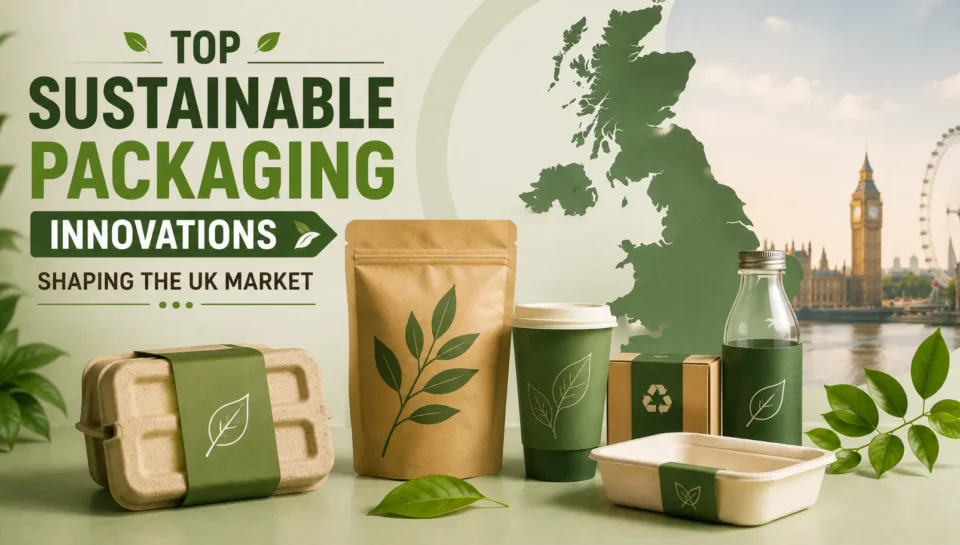
The packaging industry in the UK is undergoing a significant transformation. As environmental regulations tighten and consumers become more conscious of their purchasing decisions, businesses are rethinking how products are packaged, transported, and recycled.
Today, sustainability is no longer just a corporate initiative it has become a competitive advantage. Consumers increasingly prefer brands that reduce waste, use recyclable materials, and demonstrate a genuine commitment to environmental responsibility.
According to industry research, packaging plays a major role in purchasing decisions, particularly among younger consumers who actively seek brands with sustainable values. As a result, companies across food and beverage, cosmetics, healthcare, fashion, and FMCG sectors are investing in innovative packaging solutions that balance sustainability, functionality, and brand appeal.
In this guide, we’ll explore the top sustainable packaging innovations shaping the UK market, emerging eco-friendly packaging trends, and how businesses can prepare for the future.
Quick Overview
The biggest sustainable packaging trends in the UK include:
- Recyclable mono-material packaging
- Biodegradable packaging solutions
- Compostable packaging materials
- Refillable packaging systems
- Lightweight packaging designs
- Plant-based packaging alternatives
- Smart packaging for waste reduction
- Minimalist packaging design
- Digital printing for sustainable production
- Circular packaging strategies
These innovations help businesses reduce environmental impact while meeting growing consumer expectations.
Why Sustainable Packaging Matters in the UK
Sustainability has become one of the most influential factors in product development and branding.
UK consumers are increasingly asking questions such as:
- Is this packaging recyclable?
- Can it be composted?
- Does the brand use plastic responsibly?
- Is the packaging made from renewable materials?
At the same time, retailers and regulatory bodies are encouraging businesses to adopt more environmentally responsible packaging practices.
For brands, sustainable packaging offers benefits beyond compliance:
- Stronger brand reputation
- Improved customer trust
- Reduced material waste
- Better long-term cost efficiency
- Increased appeal to environmentally conscious consumers
1. Mono-Material Packaging
One of the biggest innovations in sustainable packaging UK is the shift toward mono-material packaging.
Traditional packaging often combines multiple materials such as plastic, foil, and paper, making recycling difficult.
Mono-material packaging uses a single material, making recycling much simpler.
Benefits
- Easier recycling
- Reduced waste
- Lower environmental impact
- Improved recycling rates
This trend is particularly popular in food packaging and flexible pouches.
2. Biodegradable Packaging
Interest in biodegradable packaging UK continues to grow across multiple industries.
Unlike conventional plastics, biodegradable materials are designed to break down naturally under appropriate conditions.
Common biodegradable materials include:
- Cornstarch-based materials
- Bagasse (sugarcane fibre)
- Bamboo
- Mushroom packaging
- Seaweed-based materials
These alternatives help reduce long-term landfill waste while supporting sustainability goals.
3. Compostable Packaging Solutions
Compostable packaging goes one step further than biodegradable materials.
When disposed of correctly, compostable packaging breaks down into natural organic matter without leaving harmful residues.
Examples include:
- Compostable food containers
- Coffee cups
- Flexible mailers
- Food wrappers
Businesses in the hospitality and food industries are increasingly adopting these solutions.
4. Lightweight Packaging Design
Reducing packaging weight is one of the simplest ways to improve sustainability.
Lightweight packaging requires:
- Less raw material
- Lower transportation costs
- Reduced carbon emissions
- Improved supply chain efficiency
Professional packaging designers achieve this by optimizing structural design without compromising product protection.
5. Refillable Packaging Systems
Many brands are moving away from single-use packaging.
Instead, they offer refillable systems where customers purchase reusable containers and refill them as needed.
This approach is becoming increasingly common for:
- Beauty products
- Cleaning products
- Personal care items
- Household goods
Refillable packaging helps reduce waste while encouraging long-term customer loyalty.
6. Plant-Based Packaging Materials
One of the fastest-growing eco-friendly packaging trends is the use of renewable plant-based materials.
Examples include:
- Sugarcane pulp
- Bamboo fibre
- Wheat straw
- Palm leaves
- Seaweed extracts
These materials reduce dependence on petroleum-based plastics and support more sustainable manufacturing practices.
7. Smart Packaging for Sustainability
Technology is playing a growing role in sustainable packaging.
Smart packaging can include:
- QR codes linking to recycling instructions
- Digital product passports
- Supply chain transparency
- Material traceability
- Consumer education
This helps consumers make informed disposal decisions while improving brand transparency.
8. Minimalist Packaging Design
Less packaging often means less waste.
Minimalist packaging focuses on:
- Reduced material usage
- Simple graphics
- Cleaner layouts
- Efficient structures
In addition to reducing environmental impact, minimalist designs often create a premium and modern brand image.
9. Digital Printing Reduces Waste
Traditional printing methods often require large production runs and generate setup waste.
Digital printing offers several sustainability advantages:
- Shorter print runs
- Less material waste
- Faster revisions
- Reduced inventory requirements
- Lower energy consumption
This makes digital printing particularly valuable for businesses producing seasonal or limited-edition packaging.
10. Circular Packaging Design
The future of packaging lies in the circular economy.
Instead of creating packaging that becomes waste, circular packaging is designed to remain in use for as long as possible.
This includes:
- Reusable packaging
- Recyclable materials
- Refillable systems
- Closed-loop recycling programs
Many leading UK brands are already adopting circular packaging strategies to reduce environmental impact.
How Sustainable Packaging Influences Consumer Buying Decisions
Modern consumers increasingly associate sustainable packaging with:
- Higher product quality
- Responsible business practices
- Premium branding
- Greater transparency
Studies consistently show that environmentally conscious consumers are more likely to choose brands that clearly communicate their sustainability efforts.
Packaging therefore becomes both an environmental initiative and a marketing advantage.
Challenges Businesses Face When Transitioning to Sustainable Packaging
Although sustainable packaging offers significant benefits, businesses should also prepare for common challenges.
These include:
Material Selection
Not every sustainable material is suitable for every product.
Cost Considerations
Some innovative materials currently have higher production costs.
Product Protection
Packaging must continue to protect products throughout transportation and storage.
Consumer Education
Customers may need guidance on how to recycle or compost new packaging formats.
Working with experienced packaging specialists helps businesses navigate these challenges effectively.
Why Partner with a Professional Packaging Design Agency?
Sustainable packaging is about more than choosing eco-friendly materials.
Successful implementation requires balancing:
- Brand identity
- Consumer expectations
- Structural performance
- Manufacturing efficiency
- Regulatory compliance
- Environmental impact
A professional packaging design agency helps businesses create packaging that is both sustainable and commercially successful.
How Langoor Designs Helps Brands Build Sustainable Packaging
With over 13 years of experience, 500+ completed projects, and clients across 50+ global markets, Langoor Designs helps businesses develop packaging solutions that combine creativity, production expertise, and sustainability.
Their services include:
- Sustainable Packaging Design
- Packaging Design Services
- Packaging Artwork Production
- Production-Ready Artwork
- Label Design
- Packaging Adaptation
- Prepress Services
- Brand Identity Development
Rather than simply following trends, Langoor Designs focuses on creating packaging systems that balance environmental responsibility with functionality, retail performance, and long-term brand growth.
Whether you’re launching a new eco-friendly product or redesigning an existing packaging range, their team helps businesses create packaging that meets modern consumer expectations while remaining production-ready.
Frequently Asked Questions
What is sustainable packaging?
Sustainable packaging uses materials and design strategies that reduce environmental impact while maintaining product protection and functionality.
What is biodegradable packaging?
Biodegradable packaging is made from materials that naturally break down over time under suitable environmental conditions.
What is the difference between biodegradable and compostable packaging?
Biodegradable packaging decomposes naturally, while compostable packaging breaks down into nutrient-rich organic matter under composting conditions without leaving harmful residues.
Why is sustainable packaging important in the UK?
UK consumers increasingly prefer environmentally responsible brands, and businesses are also responding to evolving sustainability goals and packaging regulations.
Can sustainable packaging improve sales?
Yes. Many consumers consider environmentally friendly packaging when choosing between similar products, making it an important factor in purchasing decisions.
How can a packaging design agency help with sustainable packaging?
A packaging design agency can recommend suitable materials, create efficient packaging structures, ensure production feasibility, and develop packaging that aligns with both sustainability goals and brand identity.
Final Thoughts
Sustainability is reshaping the future of packaging in the UK. From biodegradable materials and refillable systems to smart packaging and circular design, businesses have more opportunities than ever to reduce environmental impact while strengthening their brands.
The most successful companies view sustainable packaging as more than an environmental responsibility it is a strategic investment in customer trust, brand differentiation, and long-term growth.
By adopting the latest eco-friendly packaging trends and partnering with an experienced packaging design agency, UK businesses can create packaging that meets consumer expectations, supports sustainability goals, and delivers lasting commercial value.