
Great packaging doesn’t happen by accident.
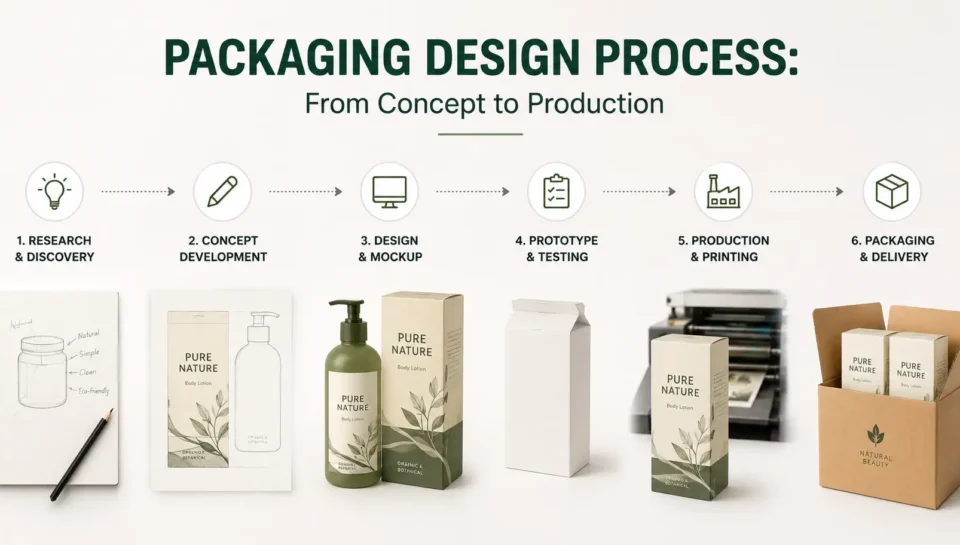
Every successful package you see on a retail shelf has gone through a carefully planned journey from market research and concept development to design, artwork production, printing, and final manufacturing.
For FMCG brands, packaging is more than a container. It is a powerful marketing tool that influences purchasing decisions, strengthens brand recognition, and helps products stand out in competitive markets.
This is why businesses invest in professional Packaging Design Services to ensure their packaging is both visually appealing and production-ready.
In this guide, we’ll walk through the complete packaging design process from concept to production, explaining each stage and showing how successful brands bring their packaging ideas to life.
Quick Answer
The packaging design process typically includes:
- Research and Discovery
- Brand Strategy Development
- Packaging Structure Planning
- Design Concept Creation
- Design Refinement
- Consumer and Stakeholder Review
- Packaging Artwork Production
- Prepress and Print Preparation
- Production and Manufacturing
- Market Launch
Each stage plays an important role in creating packaging that performs effectively both on the shelf and in production.
Why the Packaging Design Process Matter
Many businesses focus only on making packaging look attractive.
However, successful packaging must achieve several objectives simultaneously:
- Attract attention
- Communicate value
- Build trust
- Differentiate the brand
- Support regulatory compliance
- Function properly during transportation
- Print accurately
- Enhance customer experience
A structured packaging design process helps ensure all these goals are achieved.
Stage 1: Research and Discovery
Every successful packaging project starts with research.
Before any design work begins, it’s important to understand:
Target Audience
Questions to consider:
- Who will buy the product?
- What motivates their purchases?
- What design styles appeal to them?
Competitor Analysis
Review competing products to identify:
- Market trends
- Design opportunities
- Differentiation strategies
Product Positioning
Determine whether the product is:
- Premium
- Affordable
- Sustainable
- Luxury
- Family-oriented
- Health-focused
These insights influence every design decision moving forward.
Stage 2: Brand Strategy Development
Packaging should reflect the brand’s identity and values.
At this stage, businesses define:
Brand Personality
Examples:
- Premium
- Modern
- Innovative
- Natural
- Playful
Key Messages
Consumers should immediately understand:
- What the product is
- Why it matters
- What makes it unique
Visual Direction
This includes:
- Color palette
- Typography
- Graphic style
- Photography approach
Strong brand strategy creates consistency across all packaging formats.
Stage 3: Packaging Structure Planning
Before visual design begins, brands must determine the packaging format.
Examples include:
Folding Cartons
Common for FMCG and healthcare products.
Flexible Pouches
Popular for snacks, pet food, and supplements.
Bottles and Containers
Used for beverages, cosmetics, and personal care products.
Labels
Applied directly to containers and jars.
Structural decisions impact both functionality and design possibilities.
Stage 4: Design Concept Creation
This is where creativity comes to life.
Packaging designers create multiple concepts based on:
- Brand strategy
- Consumer insights
- Product positioning
The goal is to explore different creative directions.
Typical design elements include:
Logo Placement
Ensures strong brand visibility.
Typography
Improves readability and communication.
Color Systems
Influences perception and shelf impact.
Product Imagery
Helps consumers understand the product quickly.
At this stage, several design concepts may be presented for review.
Stage 5: Design Refinement
Once a concept is selected, refinement begins.
The design team improves:
- Layout hierarchy
- Typography
- Color balance
- Messaging
- Visual consistency
The objective is to create a polished design that aligns with business goals and consumer expectations.
This stage often includes multiple review rounds.
Stage 6: Consumer and Stakeholder Review
Before production, designs should be evaluated by stakeholders.
Feedback may come from:
- Marketing teams
- Sales teams
- Retail partners
- Product managers
- Focus groups
Questions typically include:
- Is the packaging clear?
- Does it stand out?
- Does it communicate the product effectively?
- Is the branding consistent?
This stage helps identify improvements before production costs are incurred.
Stage 7: Packaging Artwork Production
Once the design is approved, artwork production begins.
Many people confuse packaging design with artwork production, but they are different processes.
Packaging Design
Focuses on consumer appeal and branding.
Packaging Artwork
Focuses on production readiness.
Artwork production includes:
- Dieline implementation
- Barcode placement
- Regulatory information
- Technical specifications
- Print file preparation
This stage transforms creative concepts into production-ready assets.
Stage 8: Prepress and Print Preparation
Before printing, artwork undergoes technical verification.
This is where professional Prepress Services become essential.
Key checks include:
Color Management
Ensures accurate color reproduction.
Bleed Verification
Prevents trimming issues.
Barcode Testing
Ensures retail compatibility.
Compliance Checks
Confirms regulatory requirements are met.
Resolution Validation
Verifies image quality for printing.
This stage significantly reduces production errors.
Stage 9: Production and Manufacturing
After approval, packaging enters manufacturing.
Depending on the packaging type, production may involve:
- Offset printing
- Flexographic printing
- Digital printing
- Gravure printing
Manufacturers produce:
- Boxes
- Labels
- Pouches
- Cartons
- Sleeves
Quality control remains important throughout production.
Stage 10: Product Launch and Market Performance
The packaging journey doesn’t end after printing.
Brands should evaluate packaging performance in the market.
Key metrics include:
Shelf Visibility
Does the product stand out?
Consumer Feedback
How do customers respond?
Sales Performance
Has packaging improved conversions?
Retailer Feedback
Is the packaging practical and effective?
Continuous improvement helps brands maintain competitiveness.
Common Challenges in the Packaging Design Process
Many brands encounter challenges during packaging development.
Unclear Brand Positioning
Leads to inconsistent packaging.
Late Design Changes
Can increase costs and delay launches.
Production Constraints
Certain designs may be difficult to manufacture.
Regulatory Compliance Issues
Can require artwork revisions.
Poor Communication
Between designers, manufacturers, and stakeholders.
Working with an experienced Packaging Design Agency helps overcome these challenges.
How Packaging Design Influences Business Growth
Effective packaging contributes directly to:
Brand Recognition
Consistent packaging improves visibility and recall.
Consumer Trust
Professional packaging increases credibility.
Higher Perceived Value
Premium packaging supports premium pricing.
Increased Sales
Attractive packaging encourages purchases.
Customer Loyalty
Memorable packaging strengthens brand relationships.
For many FMCG products, packaging is one of the most important marketing assets.
Why Brands Partner With a Packaging Design Agency
Professional agencies bring expertise across every stage of the packaging process.
Benefits include:
- Strategic brand thinking
- Consumer insights
- Creative design expertise
- Packaging artwork production
- Prepress support
- Print management
- Quality control
Instead of managing multiple vendors, brands gain a streamlined process and consistent results.
How Langoor Designs Helps Brands Move From Concept to Production
With over 13 years of experience and more than 500 successful projects across 50+ markets, Langoor Designs specializes in creating packaging solutions that combine creativity, functionality, and production excellence.
Their services include:
Packaging Design Services
Creating packaging that attracts consumers and strengthens brands.
Packaging Artwork Production
Preparing production-ready files for accurate printing.
Prepress Services
Ensuring technical compliance and print quality.
FMCG Packaging Solutions
Supporting food, beverage, healthcare, personal care, and consumer goods brands.
Packaging Adaptation
Managing multilingual packaging and product variations.
What sets Langoor Designs apart is their ability to manage the entire packaging journey from concept development to final production ensuring consistency, efficiency, and high-quality results.
Frequently Asked Questions
What is the packaging design process?
The packaging design process involves research, strategy, concept development, design creation, artwork production, prepress preparation, manufacturing, and product launch.
How long does packaging design take?
Most projects take between 4 and 12 weeks depending on complexity, revisions, and production requirements.
What is the difference between packaging design and packaging artwork?
Packaging design focuses on branding and consumer appeal, while packaging artwork focuses on preparing files for printing and production.
Why are Prepress Services important?
Prepress Services help identify technical issues before printing, reducing errors and improving production quality.
What does a Packaging Design Agency do?
A Packaging Design Agency helps brands develop packaging strategies, create visual concepts, prepare artwork, and manage production requirements.
Why is packaging important for FMCG brands?
Packaging influences first impressions, consumer trust, product differentiation, and purchasing decisions, making it a critical factor in brand success.
Final Thoughts
The packaging design process is much more than creating attractive visuals. It is a strategic journey that combines research, branding, creativity, technical expertise, and production management.
From the initial concept to final manufacturing, every stage contributes to the success of a product in the marketplace.
Brands that invest in professional Packaging Design Services gain more than great-looking packaging they create stronger brand experiences, improve consumer engagement, reduce production risks, and build a foundation for long-term growth.
Whether you’re launching a new product or refreshing an existing brand, understanding the packaging design process is the first step toward creating packaging that truly performs.