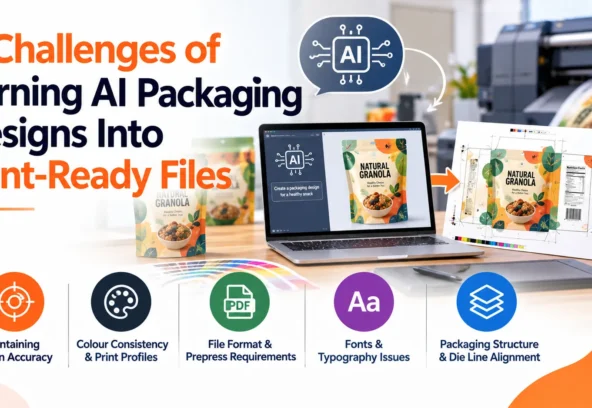

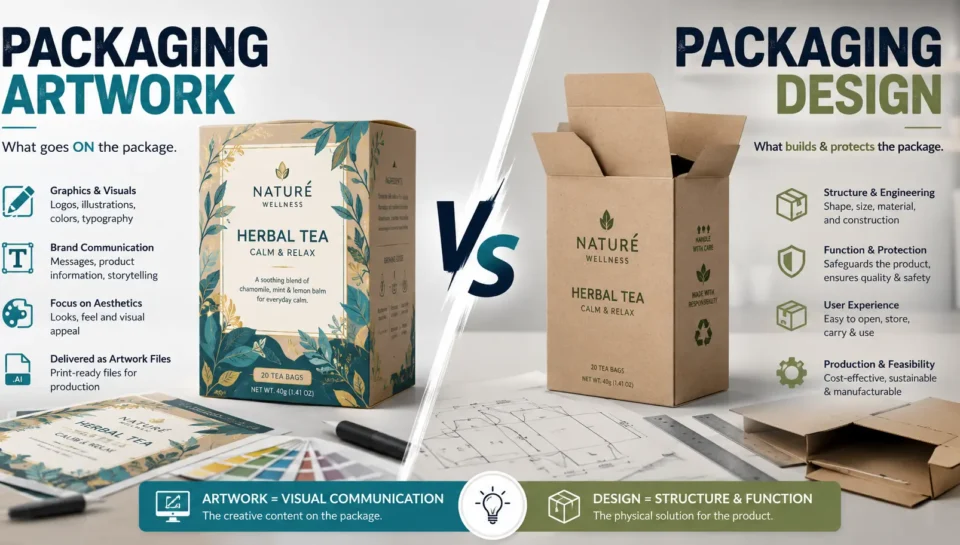
Many brands use the terms packaging artwork and packaging design interchangeably. While they are closely related, they serve very different purposes in the packaging development process.
This confusion often leads to production delays, printing errors, inconsistent branding, and costly redesigns.
If you’re launching a new FMCG product, refreshing your brand, or working with a packaging design agency, understanding the distinction between packaging artwork and packaging design can save both time and money.
In this guide, we’ll break down the differences, explain how they work together, and show why both are critical for successful product packaging.
Quick Answer
Packaging Design
Packaging design focuses on the creative and strategic development of a product’s visual identity and consumer appeal.
It answers questions such as:
- How should the product look?
- What emotions should it create?
- How will it stand out on shelves?
- How will it represent the brand?
Packaging Artwork
Packaging artwork focuses on preparing the approved design for production and printing.
It answers questions such as:
- Is the design print-ready?
- Are all regulatory requirements included?
- Are colors accurate?
- Does the file meet printer specifications?
Simple Explanation
Packaging Design attracts customers.
Packaging Artwork ensures the package can be manufactured correctly.
Both are essential for a successful product launch.
What Is Packaging Design?
Packaging design is the process of creating the visual appearance and overall consumer experience of a product package.
It combines:
- Branding
- Consumer psychology
- Marketing strategy
- Visual communication
- Product positioning
The goal is to create packaging that captures attention, builds trust, and encourages purchase decisions.
Key Elements of Packaging Design
Brand Identity
The package should reflect the company’s personality and values.
Typography
Fonts must communicate the brand’s positioning and improve readability.
Color Strategy
Colors influence perception and purchasing behavior.
Product Hierarchy
Consumers should immediately understand:
- Brand name
- Product name
- Key benefits
Visual Storytelling
Packaging should communicate a clear message within seconds.
What Is Packaging Artwork?
Packaging artwork is the technical process of converting approved packaging designs into production-ready files for printing and manufacturing.
Once the design is finalized, artwork specialists ensure everything is technically correct before production begins.
Packaging artwork involves:
- Print file preparation
- Barcode placement
- Regulatory information
- Color management
- Printer specifications
- Dieline implementation
- Prepress checks
- Packaging adaptation
Artwork is where creativity meets production.
Packaging Artwork vs Packaging Design: Key Differences
| Feature | Packaging Design | Packaging Artwork |
| Primary Goal | Attract consumers | Prepare for printing |
| Focus | Creativity and branding | Technical accuracy |
| Stage | Early project phase | Final production phase |
| Audience | Consumers | Printers and manufacturers |
| Deliverables | Design concepts | Print-ready files |
| Consumer Psychology | High focus | Limited focus |
| Compliance Management | Basic | Extensive |
| Color Accuracy | Visual direction | Technical execution |
| Printing Requirements | Not primary focus | Critical focus |
| Product Launch Support | Strategic | Operational |
Why Packaging Design Comes First
Before artwork preparation begins, a brand needs a packaging strategy.
The design phase determines:
- Product positioning
- Brand perception
- Shelf visibility
- Competitive differentiation
For example:
A premium skincare brand requires packaging that communicates luxury.
A children’s snack product requires packaging that feels playful and approachable.
These decisions happen during the packaging design phase.
Without a strong design foundation, even technically perfect artwork will fail to attract customers.
Why Packaging Artwork Is Equally Important
Many brands underestimate artwork production.
However, some of the most expensive packaging mistakes occur during the artwork stage.
Common issues include:
Printing Errors
Incorrect bleed settings or missing dielines can lead to production problems.
Regulatory Violations
Missing mandatory information can create legal issues.
Barcode Problems
Unreadable barcodes can disrupt retail distribution.
Color Inconsistencies
Packaging colors may differ from approved brand standards.
Production Delays
Improper files often require multiple revisions.
Professional artwork production helps eliminate these risks.
Real-World Example: How Design and Artwork Work Together
Imagine a new FMCG beverage brand launching a product.
Step 1: Packaging Design
The design team creates:
- Brand identity
- Bottle graphics
- Color palette
- Product messaging
- Consumer-facing visuals
Step 2: Packaging Artwork
The artwork team prepares:
- Print-ready files
- Nutrition information
- Barcodes
- Manufacturing details
- Regulatory requirements
- Dieline implementation
Only after both stages are completed can production begin.
Common Mistakes Brands Make
Treating Artwork as a Simple Design Task
Artwork requires technical expertise beyond graphic design.
Skipping Artwork Quality Checks
Small errors can become costly production issues.
Working With Separate Vendors
Miscommunication between designers and artwork teams can create inconsistencies.
Prioritizing Appearance Over Production
A beautiful design is useless if it cannot be manufactured correctly.
Ignoring Future Adaptations
Product variants often require packaging updates that should be planned during artwork development.
How Packaging Design Impacts Consumer Buying Decisions
Packaging design directly influences:
First Impressions
Consumers often decide within seconds whether to consider a product.
Perceived Quality
Premium packaging increases perceived value.
Brand Recognition
Consistent design improves recall and trust.
Purchase Intent
Strong packaging encourages consumers to choose one product over another.
This is why leading brands invest heavily in professional Packaging Design Services.
Why Packaging Artwork Matters for FMCG Brands
FMCG brands often manage:
- Multiple SKUs
- Product variants
- Language adaptations
- Regulatory requirements
- Retail compliance standards
Artwork production ensures consistency across all packaging formats.
For growing brands, effective artwork management can significantly improve operational efficiency.
How a Packaging Design Agency Adds Value
A professional Packaging Design Agency provides expertise across both creative design and technical artwork production.
Benefits include:
Consistent Branding
Maintains visual consistency across products.
Faster Product Launches
Reduces revisions and production delays.
Regulatory Compliance
Ensures packaging meets industry requirements.
Print Accuracy
Prevents costly manufacturing errors.
Scalable Packaging Systems
Supports future product expansions.
Instead of treating packaging as a one-time project, agencies create systems that support long-term growth.
How Langoor Designs Combines Packaging Design and Artwork Excellence
For FMCG brands, success depends on both creative packaging and flawless production execution.
Langoor Designs has spent more than 13 years helping brands bridge the gap between packaging design and packaging artwork production.
Their expertise includes:
- Packaging Design Services
- Packaging Artwork Production
- FMCG Packaging Solutions
- Brand Identity Design
- Packaging Adaptation
- Production-Ready Artwork
- Print Management Support
With over 500 completed projects across 50+ markets, Langoor Designs understands that great packaging requires both strategic creativity and technical precision.
Their integrated approach helps brands:
- Improve shelf impact
- Reduce production errors
- Accelerate product launches
- Maintain packaging consistency
- Strengthen brand recognition
For businesses looking to scale their product portfolio, partnering with an experienced packaging design agency can provide a significant competitive advantage.
Frequently Asked Questions (FAQs)
Is packaging artwork the same as packaging design?
No. Packaging design focuses on branding and visual communication, while packaging artwork focuses on preparing files for production and printing.
Which comes first: packaging design or packaging artwork?
Packaging design comes first. Once the design is approved, artwork production prepares it for manufacturing.
Why is packaging artwork important?
Artwork ensures packaging can be printed accurately, meets compliance requirements, and avoids costly production errors.
Can a graphic designer create packaging artwork?
Some graphic designers can handle basic artwork, but professional artwork production often requires specialized technical expertise.
What does a packaging design agency do?
A packaging design agency develops packaging concepts, branding systems, visual identity, and often manages artwork production and print preparation.
Do FMCG brands need both packaging design and artwork services?
Yes. Packaging design attracts consumers, while artwork production ensures the packaging can be manufactured correctly and consistently.
Final Thoughts
Packaging design and packaging artwork serve different but equally important roles in product development.
Packaging design focuses on creating a compelling visual identity that attracts consumers and strengthens brand recognition.
Packaging artwork ensures that design becomes a production-ready reality without errors, compliance issues, or printing problems.