
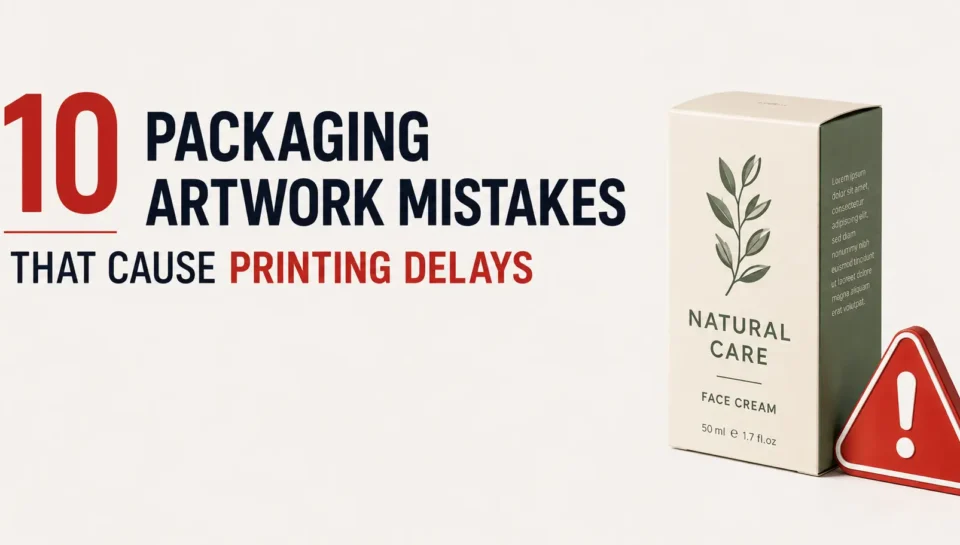
Launching a new product is exciting, but even the most creative packaging design can run into costly problems if the artwork isn’t prepared correctly.
Many brands spend weeks perfecting their packaging design, only to face unexpected printing delays because of artwork errors that could have been avoided.
Whether you’re launching a new FMCG product, updating existing packaging, or managing multiple SKUs, artwork mistakes can lead to:
- Production delays
- Increased printing costs
- Missed launch deadlines
- Regulatory issues
- Product shortages
- Brand reputation damage
The good news?
Most packaging artwork problems are preventable.
In this guide, we’ll cover the most common Packaging Artwork mistakes that cause printing delays and explain how brands can avoid them.
Quick Answer
The most common packaging artwork mistakes include:
- Incorrect dielines
- Missing bleed areas
- Low-resolution images
- RGB color files instead of CMYK
- Missing fonts
- Barcode errors
- Incorrect regulatory information
- Spelling and copy mistakes
- Improper file formats
- Last-minute artwork changes
Professional artwork production and quality control processes help eliminate these issues before printing begins.
Why Packaging Artwork Is Critical
Packaging artwork is the technical bridge between design and production.
While packaging design focuses on consumer appeal, packaging artwork ensures the design can be manufactured correctly.
A single artwork error can stop an entire production run.
For FMCG brands managing multiple products, even a small mistake can result in weeks of delays and thousands of dollars in additional costs.
Mistake #1: Using Incorrect Dielines
One of the most common causes of packaging production delays is using the wrong dieline.
A dieline serves as the blueprint for packaging production and defines:
- Cut lines
- Fold lines
- Glue areas
- Safety zones
- Bleed zones
What Happens When Dielines Are Incorrect?
- Graphics become misaligned
- Text may be cut off
- Packaging may not assemble correctly
- Printers reject the artwork
How to Avoid It
Always obtain dielines directly from your packaging manufacturer before beginning artwork production.
Mistake #2: Missing Bleed Areas
Bleed is the extra design area that extends beyond the final trim edge.
Without bleed, slight cutting variations can create unwanted white borders around the package.
Common Problems
- Visible white edges
- Inconsistent appearance
- Artwork rejection
Best Practice
Most packaging printers require:
- 3mm bleed
- 5mm bleed
Always confirm specifications before file preparation.
Mistake #3: Using Low-Resolution Images
Packaging often looks excellent on screen but prints poorly because of image quality issues.
Common Causes
- Screenshots
- Website images
- Social media graphics
- Compressed files
Results
- Blurry product images
- Pixelated packaging
- Poor print quality
Recommended Resolution
Use images with a minimum resolution of 300 DPI for commercial packaging.
Mistake #4: Designing in RGB Instead of CMYK
Many designers create packaging in RGB color mode because it looks vibrant on digital screens.
However, commercial printing uses CMYK.
What Happens?
Colors may appear:
- Duller
- Darker
- Different from approved designs
Solution
Convert artwork to CMYK before final production and verify critical brand colors.
Mistake #5: Missing or Unembedded Fonts
Font issues are surprisingly common in packaging production.
When artwork files are transferred between systems, missing fonts can alter the appearance of packaging.
Potential Consequences
- Incorrect typography
- Layout shifts
- Rejected files
Best Practice
Before submitting artwork:
- Outline fonts
- Or properly embed fonts
This ensures consistent appearance during production.
Mistake #6: Barcode Placement Errors
Barcodes are essential for retail distribution.
Unfortunately, many packaging projects encounter delays because barcodes are not properly prepared.
Common Issues
- Incorrect size
- Poor placement
- Missing quiet zones
- Insufficient contrast
Consequences
- Scanning failures
- Retail acceptance issues
- Product launch delays
Recommendation
Always test barcodes before final approval.
Mistake #7: Missing Regulatory Information
Different industries have specific packaging regulations.
Examples include:
Food Products
- Ingredients
- Nutritional information
- Allergen declarations
Cosmetics
- Usage instructions
- Ingredient lists
- Warnings
Healthcare Products
- Manufacturing details
- Compliance information
Missing mandatory information often results in artwork rejection.
Mistake #8: Copy and Spelling Errors
Many packaging delays happen because of simple proofreading mistakes.
Examples include:
- Misspelled product names
- Incorrect ingredient information
- Wrong contact details
- Outdated website URLs
Why This Matters
Once errors are discovered, artwork must be corrected and approved again, delaying production.
Solution
Implement multiple review stages before artwork sign-off.
Mistake #9: Using Incorrect File Formats
Printers require specific file formats to ensure production accuracy.
Common mistakes include submitting:
- Editable design files
- Low-resolution PDFs
- Missing linked assets
Preferred Format
Most packaging manufacturers prefer:
- Press-ready PDF files
- Vector artwork
- Embedded assets
Always confirm printer requirements before exporting files
Mistake #10: Last-Minute Artwork Changes
One of the biggest causes of production delays is making changes after artwork has already been approved.
Common Examples
- New claims added
- Regulatory updates
- Marketing revisions
- Product information changes
Every change increases the risk of:
- New errors
- Additional approvals
- Production delays
Best Practice
Finalize all content before artwork production begins.
Additional Packaging Artwork Mistakes Brands Often Overlook
Incorrect Color Profiles
Brand colors may print inconsistently.
Overprinting Errors
Certain elements may disappear during printing.
Missing Linked Files
Images may not appear correctly.
Incorrect Safety Margins
Important information may be trimmed.
Unverified Product Claims
Can create compliance issues.
These seemingly minor errors often become major production challenges.
How Printing Delays Impact FMCG Brands
Printing delays affect more than just production schedules.
They can impact:
Product Launches
Missed launch dates can reduce sales opportunities.
Retail Relationships
Retailers expect timely inventory availability.
Marketing Campaigns
Promotional schedules may be disrupted.
Operational Costs
Reprints and rush production increase expenses.
Brand Reputation
Delays can affect customer trust and retailer confidence.
This is why professional Packaging Artwork management is critical.
Packaging Artwork Quality Control Checklist
Before sending files to production, confirm:
Design
- Approved design finalized
- Correct dieline used
- Layout verified
Images
- High resolution
- Linked properly
- Print quality verified
Typography
- Fonts outlined
- Proofread
- Consistent formatting
Colors
- CMYK conversion completed
- Brand colors verified
Compliance
- Regulatory information included
- Product claims validated
- Barcode tested
Production
- Press-ready PDF exported
- Printer specifications met
This simple checklist can prevent most production delays.
Why Brands Partner With Artwork Production Specialists
As product portfolios grow, packaging becomes more complex.
Many brands manage:
- Multiple SKUs
- Packaging adaptations
- Regulatory changes
- Regional packaging versions
Specialized artwork teams help ensure:
- Accuracy
- Consistency
- Faster approvals
- Reduced production risks
This is especially important for FMCG brands operating at scale.
How Langoor Designs Helps Brands Avoid Packaging Artwork Errors
With over 13 years of experience and more than 500 completed projects across 50+ markets, Langoor Designs helps brands create production-ready packaging artwork that minimizes printing issues and accelerates product launches.
Their expertise includes:
Packaging Artwork Production
Preparing accurate, print-ready packaging files.
Packaging Adaptation
Managing multiple SKUs and regional variations.
Prepress Services
Performing technical checks before production.
FMCG Packaging Support
Helping brands maintain packaging consistency across product portfolios.
By combining creative expertise with technical precision, Langoor Designs helps businesses reduce costly errors and improve packaging efficiency.
Frequently Asked Questions
What is packaging artwork?
Packaging artwork is the final technical version of packaging files prepared for commercial printing and manufacturing.
Why do packaging artwork mistakes cause printing delays?
Artwork errors often require revisions, re-approvals, and file corrections before production can continue.
What is the most common packaging artwork mistake?
Incorrect dielines, missing bleeds, and RGB color files are among the most common issues.
How can brands reduce packaging artwork errors?
Implement quality control processes, proofread thoroughly, and work with experienced artwork production specialists.
Why is barcode verification important?
Incorrect barcodes can prevent products from being scanned, distributed, or sold through retail channels.
What role do prepress services play?
Prepress services identify and correct technical issues before printing begins, reducing production risks and delays.
Final Thoughts
Packaging artwork may seem like a technical step in the packaging process, but it has a direct impact on production efficiency, product launch timelines, and overall business performance.
From incorrect dielines and missing bleeds to barcode failures and regulatory errors, artwork mistakes can quickly turn into expensive delays.
The most successful FMCG brands treat packaging artwork as a critical business function rather than an afterthought.
By investing in professional artwork production, quality control processes, and experienced packaging specialists, brands can reduce risk, improve accuracy, and bring products to market faster.
When it comes to packaging, preventing errors before production is always more cost-effective than fixing them afterward.