
Creating a beautiful packaging design is only half the journey. Before your product reaches store shelves, your packaging files must be properly prepared for printing and production.
This critical stage is known as prepress, and it’s where many packaging projects succeed or fail.
A small mistake in artwork preparation can lead to:
- Printing delays
- Color inconsistencies
- Barcode failures
- Regulatory compliance issues
- Expensive reprints
- Product launch setbacks
That’s why leading FMCG brands rely on professional Prepress Services to ensure their packaging artwork is production-ready before it goes to print.
In this guide, you’ll learn exactly how to prepare print-ready packaging artwork, avoid costly mistakes, and streamline your packaging production process.
Quick Answer
Print-ready packaging artwork is a finalized packaging file that includes:
✅ Correct dielines
✅ Proper bleed and safety margins
✅ CMYK color settings
✅ High-resolution images
✅ Embedded or outlined fonts
✅ Barcode verification
✅ Regulatory information
✅ Printer specifications
✅ Production-ready PDF files
Professional Prepress Services ensure all these elements are checked before manufacturing begins.
What Is Print-Ready Packaging Artwork?
Print-ready packaging artwork is the final version of a packaging design that has been technically prepared for commercial printing.
Unlike design files created for presentations or approvals, print-ready artwork includes all production requirements needed by printers and packaging manufacturers.
The goal is simple:
Ensure the printed package looks exactly as intended while avoiding costly production errors.
What Are Prepress Services?
Prepress Services refer to the technical process of preparing packaging artwork for printing and production.
These services act as the bridge between creative design and physical manufacturing.
Typical prepress activities include:
- Artwork adaptation
- Dieline setup
- Color management
- Barcode verification
- Print file preparation
- Regulatory compliance checks
- Packaging versioning
- Printer specification management
- Proofing and quality control
Without proper prepress preparation, even excellent packaging designs can fail during production.
Why Print-Ready Artwork Is Important
Many brands focus heavily on packaging design but overlook artwork production.
Unfortunately, printing errors can be extremely expensive.
Common Problems Caused by Poor Artwork Preparation
Color Mismatches
Brand colors may print differently than expected.
Missing Bleed Areas
Important design elements may be cut off during production.
Barcode Failures
Products may not scan properly in retail environments.
Incorrect Regulatory Information
Compliance issues can delay product launches.
Packaging Reprints
Small errors can require thousands of units to be reprinted.
Professional Prepress Services help eliminate these risks before production begins.
Step-by-Step Guide to Preparing Print-Ready Packaging Artwork
Step 1: Start With the Approved Packaging Design
Before artwork production begins, ensure the packaging design has been fully approved.
The approved design should include:
- Brand identity
- Product name
- Graphics
- Color palette
- Typography
- Product claims
Making major design changes during the artwork stage often creates delays and confusion.
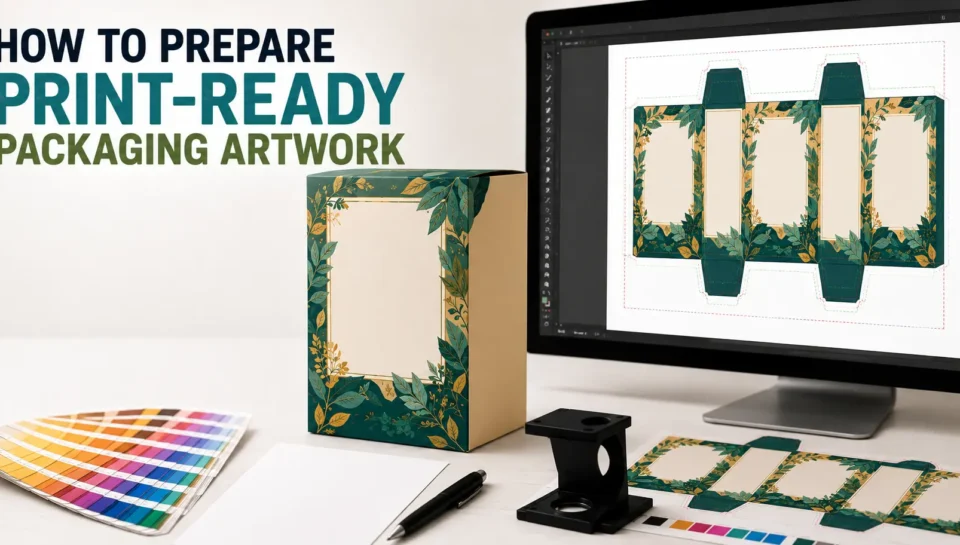
Step 2: Obtain the Correct Dieline
A dieline acts as the blueprint for your packaging.
It shows:
- Cut lines
- Fold lines
- Glue areas
- Safety zones
- Bleed zones
Every packaging format requires a unique dieline.
Examples include:
- Folding cartons
- Labels
- Flexible pouches
- Corrugated boxes
- Tubes
- Shrink sleeves
Always obtain the dieline directly from the packaging manufacturer.
Step 3: Set Up Bleed and Safety Margins
Commercial printing requires additional space around the design.
Bleed Area
The bleed extends beyond the trim edge to prevent white borders after cutting.
Most printers require:
- 3mm bleed
- 5mm bleed
depending on packaging specifications.
Safety Margin
Important elements such as logos and text should remain inside the safety zone.
This prevents accidental trimming.
Step 4: Convert Colors to CMYK
Many designers create artwork using RGB colors.
However, commercial printing uses CMYK color modes.
Before production:
- Convert RGB to CMYK
- Verify brand colors
- Check Pantone references if required
This helps maintain color accuracy during printing.
Step 5: Use High-Resolution Images
Low-quality images can ruin packaging quality.
Recommended image resolution:
Minimum
300 DPI
Preferred
300–600 DPI for premium packaging applications
Avoid:
- Screenshots
- Web images
- Compressed files
Always use original production-quality assets.
Step 6: Embed or Outline Fonts
Missing fonts are one of the most common packaging production problems.
Before sending artwork:
- Convert fonts to outlines
- Or embed fonts properly
This ensures typography appears correctly across systems.
Step 7: Verify Barcode Accuracy
A barcode is not just a design element.
It must function correctly in retail environments.
Check:
- Barcode placement
- Size requirements
- Quiet zones
- Scan testing
Unreadable barcodes can disrupt distribution and retail operations.
Step 8: Review Regulatory Information
Many FMCG categories require mandatory information.
Examples include:
Food Products
- Ingredients
- Nutritional information
- Allergen declarations
Cosmetics
- Usage instructions
- Warnings
- Ingredients
Pharmaceuticals
- Compliance information
- Batch numbers
- Manufacturing details
Regulatory requirements vary by product category and market.
Step 9: Check Packaging Copy Carefully
Before final production:
Review:
- Product name
- Ingredients
- Claims
- Contact information
- Website URLs
- Batch details
Even small text errors can result in expensive reprints.
Step 10: Generate a Print-Ready PDF
Most printers request press-ready PDF files.
These files should include:
- Bleeds
- Crop marks
- Embedded images
- Correct color profiles
- Dielines
- Vector graphics
PDF/X standards are commonly preferred for packaging production.
Print-Ready Packaging Artwork Checklist
Before submitting artwork for printing, confirm:
Design & Layout
- Approved design finalized
- Correct dieline used
- Bleed included
- Safety margins applied
Images
- 300 DPI minimum
- No missing links
- High-quality assets
Colors
- CMYK converted
- Pantone colors verified
- Brand colors checked
Typography
- Fonts outlined
- Text proofread
- No missing fonts
Compliance
- Regulatory information included
- Barcode verified
- Manufacturing details confirmed
Output
- Press-ready PDF exported
- Printer specifications met
Common Packaging Artwork Mistakes
Many production issues stem from avoidable mistakes.
Incorrect Dielines
Using outdated templates creates alignment problems.
Missing Bleeds
Results in unwanted white edges.
RGB Artwork
Produces inaccurate print colors.
Low-Resolution Images
Creates blurry packaging graphics.
Unverified Barcodes
Can prevent products from being sold.
Last-Minute Edits
Increase the likelihood of errors.
Professional Prepress Services significantly reduce these risks.
Why FMCG Brands Outsource Prepress Services
Modern FMCG brands often manage:
- Multiple SKUs
- Packaging variants
- Language adaptations
- Regulatory updates
- Frequent product launches
Managing these internally can become challenging.
Outsourcing Prepress Services helps brands:
- Improve efficiency
- Reduce production errors
- Accelerate launch timelines
- Maintain consistency
- Lower operational costs
How Langoor Designs Supports Print-Ready Packaging Production
With more than 13 years of experience and over 500 projects completed across 50+ markets, Langoor Designs specializes in both packaging design and production-ready artwork services.
Their expertise includes:
Packaging Artwork Production
Preparing files for accurate commercial printing.
Prepress Services
Ensuring technical compliance and production readiness.
Packaging Adaptation
Managing multilingual and multi-SKU packaging systems.
FMCG Packaging Solutions
Supporting brands across food, beverage, personal care, healthcare, and consumer goods sectors.
By combining creative design expertise with technical production knowledge, Langoor Designs helps brands reduce errors, accelerate product launches, and achieve consistent packaging quality.
Frequently Asked Questions
What is print-ready packaging artwork?
Print-ready packaging artwork is a finalized file prepared according to printer specifications and production requirements for commercial packaging printing.
What are Prepress Services?
Prepress Services involve preparing packaging artwork for production through technical checks, color management, barcode verification, compliance reviews, and print file preparation.
Why is CMYK important for packaging printing?
Commercial printing uses CMYK color processes. RGB files often produce unexpected color shifts during printing.
What resolution should packaging images be?
Most packaging artwork should use images with a minimum resolution of 300 DPI.
Why are dielines important?
Dielines define where packaging will be cut, folded, and assembled, ensuring accurate production.
Can packaging artwork be created without professional prepress support?
Yes, but the risk of production errors increases significantly. Professional Prepress Services help ensure accuracy, compliance, and print quality.
Final Thoughts
Preparing print-ready packaging artwork is one of the most important stages in the packaging development process. While great packaging design attracts consumers, accurate artwork production ensures the package can be manufactured correctly and consistently.
From dielines and color management to barcode verification and regulatory compliance, every detail matters.
Investing in professional Prepress Services helps brands reduce costly mistakes, accelerate product launches, and maintain high-quality packaging standards across product portfolios.
For FMCG companies looking to scale efficiently, print-ready artwork isn’t just a technical requirement it’s a critical part of delivering a successful product to market.