

Taking a product into a new market involves more than translating the packaging into another language.
A product sold in the UK may need different information from the same product sold in the USA, UAE or Australia. Packaging requirements, languages, product claims, measurements, symbols and printing specifications can all vary from one market to another.
For global brands, the challenge is balancing two important requirements: maintaining a consistent brand identity while adapting packaging to meet the needs of individual markets.
Without a structured artwork management process, multiple versions can become difficult to control. Teams may end up working with outdated files, inconsistent layouts, incorrect product information or unapproved design changes.
This is where global packaging artwork management becomes essential.
In this guide, we explore how brands can manage packaging artwork across different markets while maintaining visual consistency, accuracy and production readiness.
1. Why Global Packaging Artwork Management Matters
When a brand operates in multiple countries, its packaging artwork portfolio can quickly become complicated.
One product may have several variations based on:
- Country or sales region
- Language and translation requirements
- Product size and pack format
- Local product information
- Regulatory and market-specific content
- Barcode and distribution requirements
- Printer and manufacturing specifications
For example, a single FMCG product may require separate packaging versions for the UK, USA, UAE and Australia.
The core brand identity should remain recognisable, but certain packaging elements may need to change to suit each market.
Without proper coordination, these differences can create inconsistencies and increase the risk of errors during artwork production.
A structured process helps teams manage these variations without losing control of the overall brand identity.
2. Establish Global Brand Guidelines
The first step is to define which elements of the packaging must remain consistent across every market.
Global brand guidelines provide a common reference for all teams involved in packaging development and artwork production.
These guidelines should cover:
- Logo usage and placement
- Brand colours and typography
- Layout structure and visual hierarchy
- Product image and illustration styles
- Iconography and graphic elements
- Brand messaging and tone of voice
- Rules for adapting designs across different pack sizes
For example, a brand may require its logo, primary colours and core visual identity to remain unchanged across all countries.
Other elements, such as product descriptions, local claims or language panels, may be adapted.
The objective is to establish a recognisable global identity while allowing controlled local variations.
3. Separate Global Brand Elements from Local Market Content
Not every element of packaging needs to be identical across markets.
A useful approach is to divide packaging content into two categories.
| Global brand elements | Local market elements |
| Brand logo | Local product descriptions |
| Core brand colours | Translated content |
| Primary design language | Market-specific claims |
| Brand typography | Local contact details |
| Key visual elements | Country-specific information |
| Overall layout principles | Local symbols and required declarations |
This distinction helps teams understand what can be adapted and what should remain consistent.
For example, the front of a product pack may retain the same brand identity across all markets, while the back panel changes to accommodate different languages, product details and market-specific information.
This approach reduces unnecessary design changes and makes artwork adaptation more manageable.
4. Manage Multilingual Packaging Artwork Carefully
Language adaptation is one of the biggest challenges in global packaging projects.
A design that works well in English may need significant layout adjustments when translated into Arabic, French, German or other languages.
Differences in word length, writing direction, character size and typography can affect the overall packaging layout.
Key considerations include:
Text expansion: Some translations take up more space than the original English copy. The layout needs enough flexibility to accommodate longer text.
Right-to-left languages: Arabic and other right-to-left scripts require appropriate text direction, positioning and reading flow.
Typography: Fonts must support the required language characters and display correctly in the final artwork.
Content hierarchy: Important information should remain clear and readable even when additional languages are included.
Translation approval: Translated copy should be reviewed and approved by the relevant language and market stakeholders before final artwork release.
The artwork production team should work with approved translations rather than independently interpreting or rewriting product information.
5. Build a Master Artwork and Adaptation System
One of the most effective ways to manage multiple markets is to establish a master artwork system.
Instead of treating every country version as a separate design project, create an approved master reference that defines the core visual structure.
From this master, controlled market-specific versions can be developed.
A typical workflow looks like this:
This approach provides a repeatable structure for adding new markets, languages and product variations.
It also makes future packaging updates easier because teams can work from an established reference rather than rebuilding artwork from scratch.
6. Maintain Artwork Version Control Across Markets
When multiple teams work on packaging artwork, version control becomes critical.
A small update to one market’s packaging should not accidentally affect another market’s approved artwork.
Common version control problems include:
- Teams using outdated master artwork
- Incorrect copy being carried into a new market version
- Old barcodes appearing in updated files
- Unapproved design changes being shared with printers
- Confusion between draft, approved and production-ready files
A consistent file naming system can make a significant difference.
For example:
BRAND_PRODUCT_UK_100G_V03_APPROVED.pdf
BRAND_PRODUCT_UAE_100G_V02_APPROVED.pdf
BRAND_PRODUCT_USA_200G_V01_APPROVED.pdf
Each file name should identify the brand, product, market, pack size and revision status.
It is also important to maintain a central location for approved master files and final production artwork, with appropriate access and revision controls.
The objective is simple: everyone should know which file is current, which version is approved and which file is ready for production.
7. Create a Consistent Artwork Approval Process
Global packaging projects often involve several stakeholders across different countries and departments.
Marketing teams may review brand presentation, product teams may check product information, regulatory teams may review market-specific content, and packaging teams may coordinate technical requirements.
Without a defined approval process, feedback can become fragmented.
A structured approval workflow should include:
- Initial artwork preparation using approved content and references.
- Internal review by the relevant brand and product teams.
- Local market review of translated and market-specific information.
- Regulatory and compliance review by the responsible stakeholders.
- Final artwork approval and version confirmation.
- Technical prepress checks before printer handover.
Keep feedback consolidated wherever possible. Annotated PDFs or a central revision tracker can help everyone review the same artwork version.
The artwork production team should implement approved changes and maintain the correct revision history.
8. Adapt Artwork to Different Printing and Packaging Requirements
Global consistency does not mean every market must use identical production files.
Different countries may use different packaging suppliers, materials, printing processes or manufacturing facilities.
For example, one market may use flexographic printing for flexible packaging, while another uses gravure or digital printing.
These differences can affect technical artwork preparation.
Consider the following:
- Printing process and colour requirements
- Substrate and material specifications
- Dieline and packaging dimensions
- Bleed, safety margins and trapping
- Spot colours and special finishes
- Barcode positioning and print quality
- Printer-specific PDF and file requirements
The visual design should follow the global brand guidelines, while the technical artwork should be prepared according to the specifications of the relevant production supplier.
This distinction helps brands maintain visual consistency without overlooking local manufacturing requirements.
9. Use a Centralised Artwork Management Process
As the number of markets and SKUs increases, managing files through separate emails and individual folders becomes difficult.
A centralised artwork management process gives teams better visibility and control.
It should help them track:
- Approved master artwork
- Market-specific artwork versions
- SKU and language variations
- Current revision status
- Approval history
- Outstanding changes
- Final printer-ready files
Depending on the size of the organisation, this can be managed through a structured shared file system, an artwork management platform or a dedicated workflow.
The important thing is to establish one reliable source of truth for approved artwork.
For larger packaging portfolios, clear ownership and access permissions also help prevent accidental changes to production files.
10. Common Mistakes to Avoid in Global Packaging Artwork Management
Even established brands can experience artwork inconsistencies when their global processes are not properly organised.
Here are some common mistakes to watch for:
Using different master references: Regional teams working from separate design versions can gradually create visual inconsistencies.
Relying on unapproved translations: Incorrect or incomplete translated copy can lead to repeated revisions and delays.
Ignoring local production specifications: Artwork prepared for one printer may not meet the technical requirements of another.
Poor version control: Outdated artwork can accidentally be sent for production.
Unclear approval responsibilities: Multiple stakeholders providing conflicting feedback can slow down the process.
Treating every market as a separate design project: Recreating artwork instead of using a controlled master system can increase production time and introduce avoidable differences.
A consistent global artwork process helps reduce these risks and makes packaging updates easier to manage.
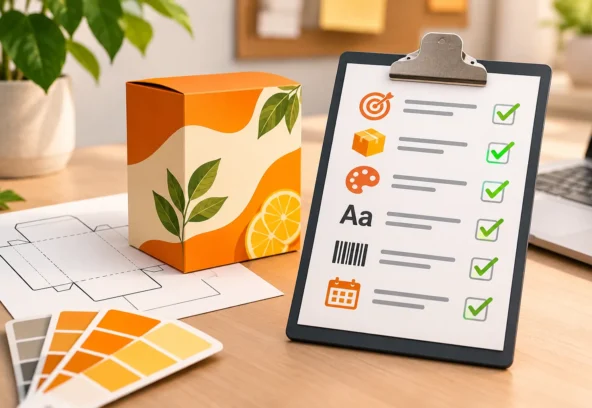
11. Global Packaging Artwork Management Checklist
Before releasing packaging artwork for a new market, use this checklist:
- Approved global brand guidelines are available.
- Correct master artwork has been identified.
- Local market content has been supplied and approved.
- Translations have been reviewed by the responsible stakeholders.
- Market-specific information has been checked.
- Correct dieline and packaging dimensions are being used.
- SKU and barcode details have been verified.
- Printer and production specifications are available.
- Artwork version and revision status are clearly identified.
- Required stakeholders have completed their approvals.
- Technical prepress checks have been completed.
- Final production files are stored in the approved location.
This checklist can be adapted to suit the brand’s product category, markets and internal approval process.
How Langoor Designs Supports Global Packaging Artwork Production
Managing packaging across multiple markets requires more than visual consistency. It requires organised artwork production, accurate adaptations, controlled revisions and an understanding of print requirements.
At Langoor Designs, we support brands and design agencies with packaging artwork production and prepress services.
Our services include:
- Packaging artwork adaptation across multiple SKUs and markets
- Master artwork setup and controlled adaptations
- Multilingual packaging layout support
- Packaging artwork revisions and updates
- Technical artwork preparation
- Barcode and variable data placement
- Print-ready PDF preparation
- Prepress checks and final file handover
We work with approved brand assets, supplied content, dielines and production specifications to help teams prepare consistent, accurate and print-ready artwork.
Whether you are expanding into new markets, updating an existing packaging range or managing a large portfolio of SKUs, having a reliable artwork production partner can help keep the process organised.
Explore our Langoor Designs portfolio to see examples of our work.
Final Thoughts
Maintaining brand consistency across global markets is not about making every packaging version look exactly the same.
It is about protecting the core brand identity while allowing controlled adaptations for different languages, products, markets and manufacturing requirements.
With clear brand guidelines, an approved master artwork system, structured version control and a consistent approval process, brands can manage international packaging projects with greater confidence.
One global brand identity. Multiple market adaptations. Consistent artwork production.
Need support managing packaging artwork across multiple SKUs and international markets?
Frequently Asked Questions
- What is global packaging artwork management?
Global packaging artwork management is the process of coordinating packaging designs, content, adaptations, approvals and production files across multiple countries and markets while maintaining brand consistency.
- How can brands maintain packaging consistency across different countries?
Brands can maintain consistency through approved global brand guidelines, master artwork files, controlled local adaptations, centralised file management and structured approval workflows.
- What is the difference between global and local packaging artwork?
Global artwork establishes the core brand identity and design structure. Local artwork adapts the packaging for individual markets, including language, product information, market-specific content and production requirements.
- How should brands manage multilingual packaging artwork?
Brands should provide approved translations, use fonts that support the required languages, account for text expansion and right-to-left scripts, and review each language version before final approval.
- Why is version control important for international packaging projects?
Version control helps teams identify the correct approved artwork for each country, SKU and revision. It reduces the risk of outdated files, incorrect information and unapproved artwork reaching production.
- Can one master artwork be used for multiple countries?
Yes. A master artwork can provide the core design structure for different markets. However, each market version may require separate content, layout adjustments, technical specifications and stakeholder approvals.