
Many business owners, startups, and FMCG brands use the terms label design and packaging design interchangeably. While they are closely related, they are not the same thing.
Understanding the difference is important because both play unique roles in product branding, customer communication, compliance, and sales performance.
A beautifully designed package may attract attention on the shelf, while a well-designed label provides the information consumers need to make a purchase decision. Together, they create a complete product experience.
Whether you’re launching a food product, cosmetic brand, supplement, beverage, or household item, knowing when you need label design, packaging design, or both can help you build a stronger brand and avoid costly mistakes.
In this guide, we’ll explain the differences, similarities, benefits, and best practices for both label design and packaging design.
Quick Answer
Label Design
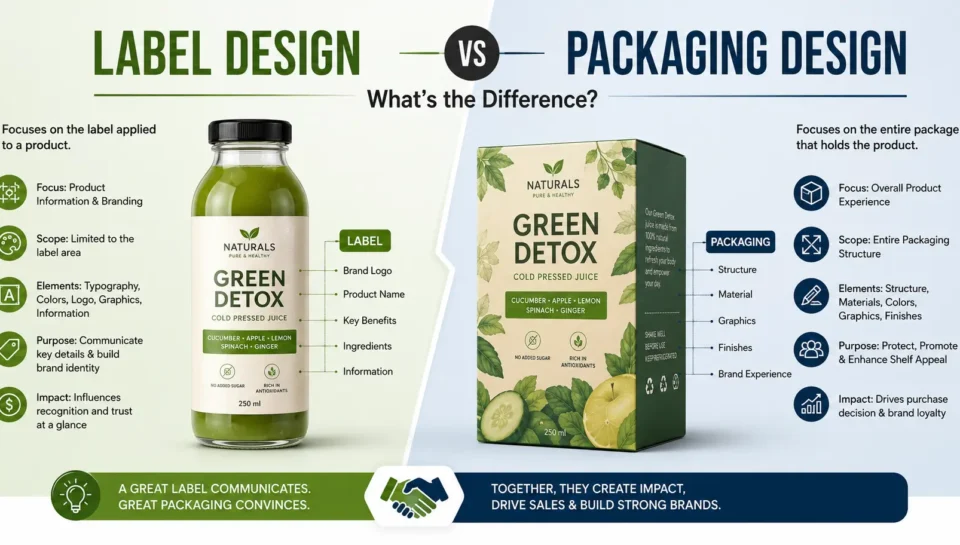
Label design focuses on the information and graphics applied directly to a product or container.
Examples include:
- Bottle labels
- Jar labels
- Product stickers
- Barcode labels
- Ingredient labels
Packaging Design
Packaging design focuses on the entire external presentation of a product, including its structure, materials, graphics, branding, and user experience.
Examples include:
- Product boxes
- Cartons
- Pouches
- Tubes
- Flexible packaging
- Shipping packaging
Simply put:
The label is part of the packaging, but packaging is much more than just the label.
What Is Label Design?
Label design refers to the creation of visual and informational elements printed directly on a label attached to a product.
Its primary purpose is to communicate essential information while reinforcing brand identity.
Typical Components of Label Design
- Brand logo
- Product name
- Product description
- Ingredients
- Nutrition facts
- Usage instructions
- Regulatory information
- Barcode
- Manufacturing details
- Contact information
Labels help consumers understand what the product is and whether it meets their needs.
What Is Packaging Design?
Packaging design involves designing the entire product presentation, including both structural and visual elements.
It focuses on how the product looks, feels, functions, and performs in retail and e-commerce environments.
Typical Components of Packaging Design
- Packaging structure
- Box design
- Carton design
- Pouch design
- Material selection
- Branding elements
- Graphics and imagery
- Typography
- User experience
- Shelf visibility
- Unboxing experience
Packaging design considers not only aesthetics but also functionality and consumer behavior.
Label Design vs Packaging Design: Key Differences
| Feature | Label Design | Packaging Design |
| Purpose | Communicates product information | Creates complete product experience |
| Scope | Limited to label area | Covers entire package |
| Focus | Information and branding | Structure, branding, functionality |
| Materials | Paper, film, stickers | Boxes, pouches, cartons, containers |
| Consumer Interaction | Reading product details | Visual and physical experience |
| Compliance | High regulatory focus | Branding and usability focus |
| Shelf Impact | Moderate | Significant |
| Design Complexity | Lower | Higher |
Why Label Design Matters
Consumers rely on labels for critical information.
A well-designed label helps customers quickly understand:
- What the product is
- How to use it
- Why it’s different
- Whether it meets their needs
Benefits of Effective Label Design
Improves Product Clarity
Customers can identify products quickly.
Builds Trust
Clear information increases credibility.
Supports Compliance
Proper labeling helps meet legal and regulatory requirements.
Strengthens Brand Recognition
Consistent branding improves recall and customer loyalty.
Why Packaging Design Matters
Packaging is often the first thing consumers notice.
Before reading a label, shoppers see the package.
In crowded retail environments, packaging can determine whether a product gets noticed at all.
Benefits of Effective Packaging Design
Enhances Shelf Visibility
Packaging helps products stand out among competitors.
Creates Emotional Connections
Visual design influences consumer perception and purchasing behavior.
Improves User Experience
Convenient packaging increases customer satisfaction.
Supports Premium Pricing
High-quality packaging often increases perceived value.
How Consumers Interact with Packaging and Labels
Consumer behavior typically follows a sequence:
Step 1: Notice the Packaging
The package captures attention through:
- Color
- Shape
- Graphics
- Structure
Step 2: Pick Up the Product
Consumers become interested enough to explore further.
Step 3: Read the Label
They evaluate:
- Ingredients
- Benefits
- Features
- Instructions
- Certifications
Step 4: Make a Purchase Decision
Packaging attracts attention.
Labels provide reassurance.
Together, they influence the final purchase.
Examples of Label Design
Beverage Bottle Label
Contains:
- Brand identity
- Flavor information
- Ingredients
- Nutritional facts
Cosmetic Product Label
Contains:
- Product benefits
- Usage instructions
- Safety information
Food Product Label
Contains:
- Nutritional details
- Expiry information
- Certifications
Examples of Packaging Design
Snack Packaging
Includes:
- Pouch structure
- Product photography
- Branding
- Material selection
Cosmetic Box Design
Includes:
- Outer carton
- Premium finishes
- Opening experience
- Brand storytelling
FMCG Product Packaging
Includes:
- Structural design
- Retail visibility
- Packaging hierarchy
- Consumer convenience
Common Mistakes Brands Make
Treating Labels and Packaging as Separate Projects
Both should work together to create a consistent brand experience.
Prioritizing Aesthetics Over Functionality
Packaging must be practical and user-friendly.
Ignoring Regulatory Requirements
Improper labels can create compliance issues.
Overcrowding Information
Consumers prefer clarity and simplicity.
Inconsistent Branding
Labels and packaging should reflect the same visual identity.
Which Is More Important: Label Design or Packaging Design?
This is a common question.
The reality is that neither is more important.
They serve different purposes.
Packaging Design Wins Attention
Consumers notice the package first.
Label Design Builds Confidence
Consumers use label information to validate their purchase decision.
The most successful brands invest in both.
The Growing Importance of Packaging Design for FMCG Brands
As competition increases across India’s FMCG sector, packaging has become a critical business asset.
Modern consumers expect packaging that is:
- Attractive
- Informative
- Sustainable
- Functional
- Premium
Brands that invest in professional packaging design often achieve:
- Better shelf presence
- Stronger brand recognition
- Increased customer trust
- Higher sales performance
How Langoor Designs Helps Brands Build Better Packaging
With over 13 years of experience and more than 500 completed projects across 50+ markets, Langoor Designs specializes in creating production-ready packaging and branding solutions for FMCG brands.
Their expertise includes:
- Packaging Design
- Label Design
- Packaging Artwork Production
- Brand Identity Design
- Product Packaging Systems
- Packaging Adaptation Services
What differentiates Langoor Designs is their ability to combine creative excellence with production expertise.
Their team understands that successful packaging must not only look attractive but also perform effectively in retail environments, comply with regulations, and support long-term brand growth.
For brands looking to improve shelf impact and customer engagement, Langoor Designs provides strategic packaging solutions that help products stand out in competitive markets.
Frequently Asked Questions
What is the difference between a label and packaging?
A label is the printed information attached to a product, while packaging includes the entire structure, design, and presentation of the product.
Is label design part of packaging design?
Yes. Label design is often considered one component of a broader packaging design strategy.
Do small businesses need professional label design?
Yes. Professional labels improve product credibility, compliance, and customer trust.
Why is packaging design important for FMCG products?
Packaging helps products attract attention, communicate value, and influence purchasing decisions.
Can a product have packaging without a label?
Technically yes, but most retail products require labels to provide information and meet regulatory requirements.
Which should be designed first: label or packaging?
Typically, packaging strategy is developed first, followed by label design to ensure consistency and proper information hierarchy.
Final Thoughts
While label design and packaging design are closely connected, they serve different purposes in the customer journey.
Packaging design captures attention, communicates brand value, and creates memorable experiences. Label design delivers essential information that builds trust and supports purchase decisions.
The most successful products don’t choose between the two—they integrate both into a unified brand experience.
For businesses looking to strengthen their market presence, improve consumer perception, and drive sales, investing in professional label and packaging design is one of the smartest long-term branding decisions they can make.