

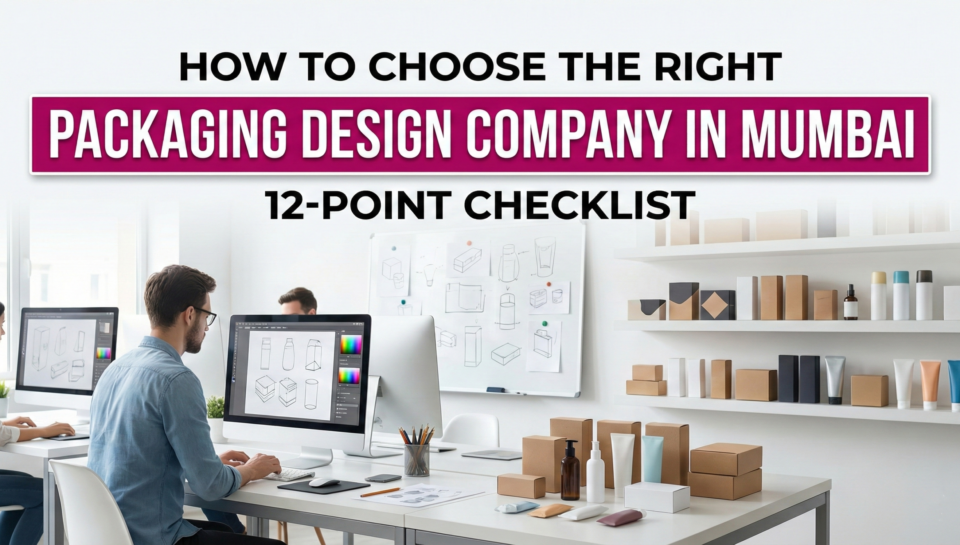
How to Choose the Right Packaging Design Company in Mumbai.
You’ve developed an amazing FMCG product. You’ve nailed your recipe, sorted your supply chain, and you’re ready to launch. But there’s one critical decision that could make or break your retail success: choosing the right packaging design company.
Your packaging is the silent salesperson on the shelf. It’s the first impression, the brand ambassador, and often the deciding factor between a sale and a pass. Yet many brands struggle with finding a packaging design agency that truly delivers results.
After working with hundreds of FMCG brands over 13+ years, we’ve seen what works, what doesn’t, and what you absolutely must look for when selecting a packaging designer. This guide breaks down exactly what to evaluate before signing that contract.
Why Choosing the Right Packaging Design Company Matters
The wrong choice can cost you more than just money. Poor packaging design can lead to:
- Delayed product launches due to multiple redesigns
- Wasted budget on files that can’t be printed
- Lost shelf presence with designs that don’t stand out
- Regulatory issues from non-compliant labeling
- Brand damage from unprofessional execution
On the flip side, the right packaging design company in Mumbai (or anywhere else) becomes your strategic partner—understanding your market, solving problems proactively, and delivering designs that drive actual sales.
Let’s dive into the 12 essential criteria for making this critical decision.
1. Check Their FMCG and Industry-Specific Portfolio
Why it matters: Packaging design for FMCG products requires different skills than designing for tech products or fashion. FMCG designers must understand retail dynamics, shelf psychology, and rapid consumer decision-making.
What to look for:
- Portfolio showcasing FMCG brands (food, beverage, personal care, cosmetics)
- Designs that look retail-ready, not just artistic concepts
- Variety in styles (they should adapt to your brand, not impose their aesthetic)
- Before/after case studies showing tangible results
- Work across different product categories within FMCG
Questions to ask:
- “Can you show me 5-7 FMCG packaging projects you’ve completed?”
- “What categories within FMCG do you specialize in?”
- “Do you have experience with products similar to mine?”
- “Can you share results from any of these projects?”
Red flag: If their portfolio is dominated by tech, fashion, or service industry work, they may lack the specific FMCG expertise your brand needs. Beautiful design means nothing if it doesn’t perform at shelf.
2. Verify Production-Ready File Expertise
Why it matters: This is where most graphic design agencies fail FMCG brands. A stunning concept that can’t be printed is worthless. You need a team that delivers production-ready artwork with proper specifications.
What to look for:
- Clear understanding of prepress requirements
- Knowledge of printer specifications and limitations
- Experience with different printing techniques (flexo, offset, digital)
- Understanding of color management (CMYK, Pantone, spot colors)
- Ability to create accurate dielines and technical specifications
- Experience coordinating with printers directly
Questions to ask:
- “What file formats do you deliver?”
- “Do you provide production-ready artwork or just design concepts?”
- “Have you worked directly with printers before?”
- “What’s your process for ensuring files meet printer specifications?”
- “Do you offer printer coordination support?”
Red flag: If they say “the printer will handle the technical stuff” or can’t explain bleed, trim, and safety areas, run. You’ll end up paying twice—once for the design, again for someone to make it printable.
Pro tip: Ask to see their layer structure in design files. Organized, properly labeled layers indicate technical competence.
3. Ask About Prepress and Printing Knowledge
Why it matters: Prepress is the bridge between design and physical product. A packaging design company with deep prepress knowledge saves you time, money, and headaches.
What to look for:
- Understanding of substrate limitations (what works on plastic vs. paper vs. metal)
- Knowledge of finishing techniques (matt, gloss, embossing, foiling)
- Experience with different packaging structures
- Familiarity with printing press limitations
- Color matching expertise for consistent reproduction
Questions to ask:
- “What’s the difference between flexo and offset printing for my product?”
- “How do you ensure color consistency across print runs?”
- “What finishing techniques would you recommend for my brand positioning?”
- “Can you explain your quality control process for print files?”
Red flag: Vague answers or deflecting technical questions to “the printer” indicate limited production knowledge.
4. Review Client Testimonials and Success Stories
Why it matters: Past performance indicates future results. Testimonials reveal not just design quality, but professionalism, communication, and problem-solving abilities.
What to look for:
- Specific testimonials from FMCG brands
- Comments about process, not just final design
- Mentions of meeting deadlines and budgets
- References to problem-solving and flexibility
- Long-term client relationships (repeat business is the ultimate endorsement)
Questions to ask:
- “Can you provide 3-4 client references I can contact?”
- “What do your clients typically say about working with you?”
- “Do you have any long-term client relationships?”
- “Can you share a challenging project and how you solved it?”
Red flag: No testimonials, reluctance to provide references, or only generic praise without specifics.
Pro tip: Look for testimonials on Google Business Profile and independent review sites, not just their website.
5. Assess Turnaround Times and Project Management
Why it matters: FMCG product launches operate on tight timelines. Missing your launch window can mean missing seasonal opportunities or letting competitors get ahead.
What to look for:
- Clear project timelines with milestones
- Defined revision rounds and approval processes
- Project management system or clear communication structure
- Buffer time for unexpected challenges
- Track record of meeting deadlines
Questions to ask:
- “What’s your typical timeline for a packaging design project?”
- “How do you handle rush projects?”
- “What’s your project management process?”
- “How many revision rounds are included?”
- “What happens if my launch date gets moved up?”
Red flag: Vague timelines like “it depends” without clear milestone structure, or agencies that promise unrealistic timelines just to win your business.
Realistic timeline expectations:
- Simple packaging design: 3-4 weeks
- Complex multi-SKU projects: 6-8 weeks
- Complete rebrand with multiple variants: 8-12 weeks
6. Understand Their Pricing Structure and Value
Why it matters: Transparent pricing prevents surprises and helps you budget properly. The cheapest option often costs more in the long run through revisions and production errors.
What to look for:
- Clear, itemized quotes
- Transparent about what’s included vs. additional costs
- Structured pricing based on complexity and deliverables
- Flexible payment terms
- Value alignment (not too cheap, not overpriced)
Questions to ask:
- “What exactly is included in your quoted price?”
- “How many SKUs does this cover?”
- “What are potential additional costs I should budget for?”
- “What’s your payment structure?”
- “Do you offer package deals for multiple products?”
Red flag: Extremely low prices (indicates inexperience or cutting corners), or prices that seem too high without clear justification.
Price ranges in India (2026):
- Budget (₹15,000-30,000): Simple designs, limited revisions, may lack production expertise
- Mid-range (₹30,000-75,000): Professional quality, production-ready files, good revision policy
- Premium (₹75,000-2,00,000+): Strategic approach, multiple SKUs, comprehensive support
7. Evaluate Their Revision Policy
Why it matters: Great design is iterative. A rigid revision policy can leave you stuck with a design that’s “almost right” but not perfect.
What to look for:
- Clear number of revision rounds included
- What constitutes a “revision” vs. a “new concept”
- Reasonable scope for changes
- Flexible approach to minor adjustments
- Transparent about additional revision costs
Questions to ask:
- “How many revision rounds are included?”
- “What’s considered within scope for revisions?”
- “How do you handle requests for major direction changes?”
- “What’s the timeline for implementing revisions?”
- “Can I request unlimited minor tweaks?”
Red flag: Limited to 2-3 revisions only, or charging exorbitant fees for additional rounds.
Best practice: Look for agencies offering “unlimited revisions within scope” or at least 4-5 revision rounds. Your satisfaction should be the priority.
8. Check Printer Coordination Experience
Why it matters: The gap between design and production is where most problems occur. A designer who coordinates with printers catches issues before they become expensive mistakes.
What to look for:
- Direct communication with printing facilities
- Pre-press file review process
- Printer approval coordination
- Problem-solving when printer feedback requires design adjustments
- Understanding of different printers’ capabilities and limitations
Questions to ask:
- “Do you coordinate directly with printers?”
- “What happens if the printer says the design can’t be executed as-is?”
- “Have you worked with my printer before?”
- “Will you manage the approval process with the printer?”
- “What’s your process for resolving printer feedback?”
Red flag: “We just send the files and the printer handles everything.” This means you’ll be the middleman dealing with technical issues you don’t understand.
9. Assess Technical Capabilities and Tools
Why it matters: Professional tools and technical expertise ensure your files work across all applications—from printer production to digital marketing.
What to look for:
- Proficiency in Adobe Illustrator (industry standard for packaging)
- Knowledge of other Adobe Creative Suite tools
- 3D mockup and visualization capabilities
- Color management systems
- File format versatility (AI, EPS, PDF, etc.)
Questions to ask:
- “What design software do you primarily use?”
- “Can you provide 3D mockups for visualization?”
- “What file formats will I receive?”
- “Do you use color management systems?”
- “Can you adapt designs for different applications (print, digital, etc.)?”
Red flag: Primary use of non-professional tools (Canva, PowerPoint) for final production files.
10. Review Their Design Process and Strategy
Why it matters: Strategic design is better than purely aesthetic design. You need a team that asks “why” before jumping to “how.”
What to look for:
- Discovery phase to understand your brand and market
- Competitor analysis and shelf studies
- Strategic thinking about positioning and differentiation
- Consumer psychology consideration
Clear rationale behind design decisions
Questions to ask:
- “Walk me through your design process from start to finish”
- “How do you research my market and competitors?”
- “What information do you need from me to start?”
- “How do you ensure the design aligns with my brand strategy?”
- “What makes your approach different from other agencies?”
Red flag: Jumping straight to design without discovery, or purely aesthetic focus without strategic thinking.
Best practice: Look for a 4-phase process: Discovery → Strategy → Design → Production
11. Verify Regulatory Compliance Knowledge
Why it matters: Non-compliant packaging can result in rejected products, fines, or product recalls. This is especially critical for food and personal care products.
What to look for:
- Knowledge of FSSAI regulations (for food products)
- Understanding of legal requirements (ingredients, nutrition, warnings)
- Experience with different market regulations (if selling internationally)
- Barcode and QR code integration expertise
- Compliance with environmental regulations (EPR, etc.)
Questions to ask:
- “Are you familiar with FSSAI labeling requirements?”
- “How do you ensure compliance with legal requirements?”
- “Do you have experience with international market regulations?”
- “Will you verify that all mandatory information is included?”
- “Do you work with food lawyers or compliance experts?”
Red flag: No mention of compliance, or expecting you to provide all compliance information without verification.
Pro tip: Consider working with agencies that have partnerships with food lawyers or compliance consultants.
12. Trust Your Gut Feeling
Why it matters: You’ll be working closely with this team for weeks or months. Chemistry, communication style, and shared values matter as much as technical skills.
What to look for:
- Responsive and clear communication
- Genuine interest in your brand and goals
- Asking thoughtful questions, not just taking orders
- Collaborative rather than dictatorial approach
- Cultural and value alignment
Questions to ask yourself:
- “Do I feel heard and understood?”
- “Are they asking good questions about my business?”
- “Do they seem genuinely excited about my project?”
- “Can I see myself working with this team under pressure?”
- “Do their values align with my brand values?”
Red flag: Pushy sales tactics, dismissive of your ideas, poor communication, or gut feeling that “something’s off.”
Additional Factors to Consider
Location: Local vs. Remote
Local agencies in Mumbai offer face-to-face meetings and better understanding of local markets. Remote agencies might offer cost advantages and specialized expertise. Both can work—what matters is communication and process.
Agency Size
- Large agencies: More resources, potentially higher costs, may treat small projects as low priority
- Mid-sized agencies: Sweet spot for most FMCG brands—experienced but still attentive
- Freelancers/Small studios: Cost-effective, personal attention, but limited capacity
Specialization Level
Generalist agencies can handle various projects, but FMCG packaging specialists bring deeper category knowledge and proven processes.
Red Flags That Should Make You Walk Away
🚩 No FMCG portfolio or relevant experience 🚩 Can’t provide client references or testimonials 🚩 Vague or no process explanation 🚩 Unrealistic promises (“We’ll get you #1 on Amazon!”) 🚩 Poor communication during inquiry phase 🚩 Extremely low prices that seem too good to be true 🚩 Pressure tactics to sign immediately 🚩 No technical knowledge about production 🚩 Generic proposals that could apply to any brand 🚩 Limited revision policy (only 1-2 rounds)
How to Shortlist Packaging Design Companies
Step 1: Research (Week 1)
- Google: “packaging design company Mumbai” or your location
- Check design directories (Behance, Dribbble, Design Rush)
- Ask for recommendations in industry groups
- Review portfolios online
- Create a shortlist of 5-7 agencies
Step 2: Initial Contact (Week 1-2)
- Send inquiry to shortlisted agencies
- Evaluate response time and quality
- Request detailed information packets
- Narrow down to 3-4 agencies
Step 3: Deep Evaluation (Week 2-3)
- Schedule discovery calls with each
- Request detailed proposals
- Check references
- Compare pricing and value
- Narrow to 2 finalists
Step 4: Final Decision (Week 3-4)
- Second meeting with finalists if needed
- Review all factors using this 12-point checklist
- Make your decision
- Negotiate terms and sign contract
Questions to Ask During Your First Meeting
About Their Process:
- “Walk me through your design process from briefing to final files”
- “How long does a project like mine typically take?”
- “Who will be my main point of contact?”
About Experience: 4. “What’s your experience with [my product category]?” 5. “Can you share a challenging project and how you solved it?” 6. “What makes your approach unique?”
About Deliverables: 7. “Exactly what will I receive at the end of the project?” 8. “What file formats are included?” 9. “Do you provide 3D mockups or just flat designs?”
About Collaboration: 10. “How do you incorporate my feedback?” 11. “What information do you need from me?” 12. “How often will we communicate during the project?”
About Practicalities: 13. “What’s included in your quoted price?” 14. “What’s your payment structure?” 15. “What happens if I need changes after the project is complete?”
Making the Final Decision
Once you’ve evaluated agencies against this checklist, use this scoring system:
Must-Haves (Deal Breakers):
- FMCG portfolio ✓
- Production-ready expertise ✓
- Clear process ✓
- Within budget ✓
- Good communication ✓
Important Factors (Weighted Scoring):
- Relevant experience: /10
- Technical expertise: /10
- Design quality: /10
- Client testimonials: /10
- Value for money: /10
- Revision policy: /10
- Project management: /10
Total Score: /70
Agencies scoring 50+ are strong candidates. 60+ are excellent choices.
What to Expect After You Choose
Phase 1: Onboarding (Week 1)
- Kick-off meeting
- Detailed briefing
- Information gathering
- Timeline confirmation
- Contract signing
Phase 2: Strategy & Concept (Week 2-3)
- Brand and market research
- Initial concepts (usually 2-3 directions)
- First round of feedback
Phase 3: Refinement (Week 3-4)
- Design development
- Multiple revision rounds
- Mockup creation
Phase 4: Production (Week 4-5)
- Final artwork preparation
- Prepress optimization
- File delivery
- Printer coordination
Common Mistakes to Avoid
❌ Choosing based on price alone The cheapest option often costs more through revisions and production errors.
❌ Not checking FMCG experience General designers lack the specific knowledge FMCG packaging requires.
❌ Skipping the reference check Past clients reveal what working with them is really like.
❌ Not clarifying deliverables Assumptions about what’s included lead to frustration later.
❌ Ignoring red flags Trust your instincts—red flags rarely disappear.
❌ Rushing the decision Take time to evaluate properly. A bad choice costs more than a slight delay.
Why Choose Langoor Designs?
After reading this guide, you might be wondering how we stack up against these criteria. Here’s our transparent assessment:
✅ 13+ years FMCG specialization with extensive portfolio
✅ Production-ready expertise – every file print-perfect
✅ Deep prepress knowledge – we coordinate directly with printers
✅ Proven track record – 500+ successful projects
✅ Transparent pricing – clear quotes, no hidden costs
✅ Flexible revisions – unlimited within scope until you’re satisfied
✅ Fast turnaround – 4-6 weeks typical timeline
✅ Strategic approach – design that sells, not just looks good
✅ Mumbai & Dubai offices – local expertise, global standards
We believe in education over sales tactics. This guide reflects our commitment to helping brands make informed decisions—even if they don’t choose us.
Ready to Choose Your Packaging Design Partner?
Selecting the right packaging design company in Mumbai (or anywhere) is a crucial decision that impacts your brand’s retail success. Use this 12-point checklist to evaluate agencies systematically and make a choice you’ll feel confident about.
Remember: the right design partner becomes an extension of your team, invested in your success and committed to delivering packaging that doesn’t just look beautiful—it sells.
Take the Next Step
Whether you’re ready to start your packaging design project or still evaluating options, we’re here to help.
Schedule a free consultation to discuss your project, get honest feedback, and see if we’re the right fit for your brand.
📞 Call: +91 98336 91513 📧 Email: artwork@langoordesigns.com 🌐 Portfolio: [View our FMCG packaging work]
No pressure, no obligation—just expert guidance to help you make the best decision for your brand.
About the Author: This guide was created by the team at Langoor Designs, a Mumbai-based packaging design company with 13+ years of experience helping FMCG brands succeed through strategic, production-ready design. We’ve worked with hundreds of brands across food, beverage, personal care, and luxury products in 50+ international markets.